domingo, 1 de marzo de 2015

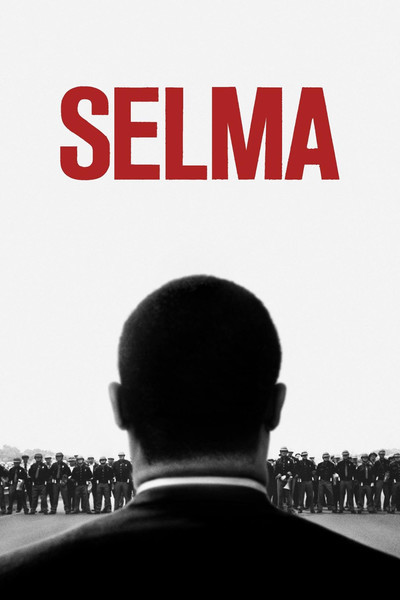
Review: Selma


Now I actually knew very little about what happened in Selma in 1965, and its impact on the civil rights movement, and very little about the film itself. I thought it was a biopic about King's wife, and was confused when they mentioned that they were in Selma and his wife's name was revealed not to be Selma. Anyway, this is an important film to watch because we see a significant historical event on screen: Martin Luther King Jr. leading a dangerous campaign to secure equal voting rights. It's fitting that Selma came out this year, as it's the 50th anniversary of the event. Note that this film is mainly about what happened in Selma (hence the title), and isn't really a Martin Luther King biopic, as I've heard many say, so if you're looking for a film that's only about Dr. King then you may have to look for another film to watch.

The movie starts off in a shocking way. I don't want to give anything away, but I wasn't expecting the  events of the opening scene happen., The initial scene focuses on characters going about their normal lives, and then the next minute there's devastation. Ava DuVernay, the director of the film, first uses slow-motion here. I found the slow-motion aspect  interesting, and and it actually became one of my favourite things about the film. However, I think after this scene the pace did tend to lag that I thought about taking a break from the film to do something else. But, I'm glad I didn't do that because the best part of the film is its second half.

As I said, one of my favourite things about the film was the use of  slow motion shots. We don't  normally see this historical films, so to see this in Selma was intriguing, but it definitely fit in and was one of the film's strengths, in my opinion. It was used wisely in the violent and dramatic scenes and wasn't overdone. You got to fully see the devastating effects of these terrible acts, and in a way, the use of slow motion made those scenes filled with violence more emotional, and gave the audience time to think and reflect on it. I know that when I saw those scenes I kept on thinking 'why is this happening?', 'could this really have happened 50 years ago?', 'this is terrible' and remembered them more vividly than the other scenes without slow  motion.

However, these scenes were also great because of the music, which is another strength of the film. Whether it was Mahalia Jackson (played by Ledisi) singing or the beautiful score by Jason Moran, the music was moving and certainly made me emotional. The music was on point, it definitely truly reflected the time period and the music that helped black civil rights groups cope during hard times,. It also made those tragic violent scenes even more tragic. I found the scene at the end extremely moving as well, mainly because of the music. Yes, David Oyelowo who plays King, was giving a very emotional, powerful and moving speech, but without the music, the final scene would not have been that great. The music for the ending credits (Glory by Common and John Legend) was powerful in another way too, because it mentioned Ferguson which is appropriate given the subject of the film.

Speaking of Ferguson. In this film we see mirror images of what happened last year in Ferguson. For example, there is a scene which shows a lot of police brutality as the police officers try and stop the black people from marching for their right to vote. I think this was one of my favourite scenes, besides the final scene, as it did really remind me of Ferguson and similar protests. It was terrible and heartbreaking to watch, and showed that not much has changed in 50 years, because it looked almost like what is happening now. The way the police treated the characters in the film enraged me. We saw police officers beating up men and even women, and in one of the saddest scenes in the film, which yet again featured excellent music, we saw a police officer shoot a young black man involved in the marches point blank in front of his family. The violence isn't only carried out by the police, but also normal citizens. We see white clergymen marching with them, and later being brutally attacked for doing so. Although, the scenes in which black people were attacked affected me more, watching innocent clergyman being attacked for supporting a right cause perturbed me.

There are a lot of familiar faces in the film, who give some great performances. However, I think that David Oyelowo was slightly miscast here as MLK. There was something about his performance that didn't scream Martin Luther King to me; it just it wasn't convincing. I've seen at least one other actor who was more of a Martin Luther King, than Oyelowo was, but his acting wasn't bad. I think he tried his best. 

As I've mentioned, I really enjoyed the end scene as it contained a powerful speech by Dr. King, accompanied by excellent music. We also got to see what happened to many of the characters in the film after black people were given the right to vote, during this powerful and moving speech, which I think made the revelation of what happened to certain people more impactful. What also gave more power to the scene was that we also see real footage of the events that took place in Selma in the film at the end, It was beautiful to see.

Even though I thought it as a little slow at times, and thought that I was not going to like it, I enjoyed it as a film overall. It could have been better, but I'm glad this film was made because I learnt a lot while watching it and it contained some moving scenes. I recommend watching it to gain more insight into what happened at Selma, and to gain more context about what's happening in places all over the USA, like Ferguson.

martes, 10 de febrero de 2015

Review: Edge of tomorrow


Now I haven't watched many Doug Liman movies - the only one I've seen is Mr. and Mrs. Smith and I enjoyed that mainly because of Brangelina, and I've heard about the Bourne Identity, but have never really seen it - so I wasn't expecting much from his latest film Edge of Tomorrow. However Liman seems to up his game here. Or maybe it's the writing which makes it a good film, or the performances from Tom Cruise (as Cage) and Emily Blunt (as Rita), or all three of these aspects put together that make the film so good. I don't know, but everything just seems to work. Edge of Tomorrow, adapted from the 2004 Japanese novel All You Need Is Kill, tells the story of a future where earth is invaded by extraterrestial beings, called Mimics, and humans need to fight to save themselves as these aliens have slaughtered millions of people and continue to do so. The films starts with showing news reporters 
from all around the world talking about the devastating events, which reminded me of various end-of-the-world films, or alien invasion movies like Battle: Los Angeles (Edge of Tomorrow is a much better film though).

 It's surprising that this film is great because some aspects of it are not that original. For example,  in films where there's character who doesn't know how to fight, is scared of fighting and is bad at it, we often see them turn into highly skilled fighters and save the day, and this is what exactly happens here. But maybe the reason why this film gets it right is because we're seeing action man Tom Cruise as the character who is useless at and against anything to do with fighting.

When  looking at the theatrical  release poster one would think that this is just another film where Cruise is gonna kick ass and take names throughout the whole of the film, as he's done in the whole Mission Impossible franchise and in other films such as Jack Reacher and Oblivion, and we'd still expect this when we see him in army uniform at the beginning of the film. However, we're initially presented with a character who's not used to combat, and who is frequently called a coward throughout the movie as he always wants to run away from the fight. It was quite funny to see Cruise running away from combat and doing anything to get out of fighting, and then being clueless about how to fight in the suits that soldiers have to wear. I think this is where the majority of the comedy in the film comes from.

Despite adamantly stating that he doesn't want to fight, Cruise's character, Cage is sent to fight in one of the next battles. This mission is meant to be an easy win for humans, but before they've even landed things go wrong, and it seems as if the Mimics know exactly what their plans are. Cage survives longer than a lot of the more experienced soldiers, even the soldier who's the face of the war, but he eventually dies - I won't spoil how he initially dies because I think his death was filmed quite well, and was a nice (well, not really nice) surprise for me. However, after he dies he wakes up again at the beginning of the day and  finds out that somehow the day resets every time he dies. As the tagline says he has to  "Live. Die. Repeat". I said that it was amusing to see Cruise as a character who's bad at combat and who's a coward, but what was even funnier, and quite hilarious were, the various ways he died. The first way he died was shot nicely as I said,  and was more serious, but the rest that followed were quite funny and stupid - one included him rolling underneath a car to slip away and find someone, but his timing was off. I'll leave it to your imagination to figure out what happened next...

In Edge of Tomorrow, we see a different side to Emily Blunt here, which I love, as we're used to seeing her in films such as Looper, The Devil Wears Prada and  The Adjustment Bureau, where she doesn't really kick ass, but in this film she does nothing but be a bamf (badass motherf*cker). In fact, her character Rita is the top soldier and the face of winning the war: a true war hero. She's quite brutal and does whatever it takes to try to win the war, even if it means sacrificing her own life. Cage does end up also kicking ass in the end, but without Rita this wouldn't have happened. He would have also still been clueless as to what was going on with him, and would have been sent to a pysch ward if Rita weren't there. However, there's a certain  weird  scene with Blunt's character, Rita, where she is doing push-ups on the floor and Cage interrupts her. She ends her push-ups by pressing her body weirdly against the floor, and this is repeated throughout the film because the day resets.  It was odd to me, but also funny to see this. It really has the potential to become an inside joke between you and whoever else watches the film. It  also added to the comical aspect of the film, even though I don't think it was meant to be purposely funny though.

Not only the characters interested me, but also the music. I was impressed by the musical score because it fit every scene perfectly. It was dark and was especially badass (sorry if I'm overusing thia, but it is needed to describe a film like Edge of Tomorrow) during the fighting scenes  on the  beach and the same track was repeatedly used at
different times in this certain scene after the day was reset. I think  that's why  I didn't get tired of it being repeated. It fit in well with the whole groundhog day aspect of the  film and intensified the moment. For me, the score was at its best  during a scene in Paris. I say this because for some reason the music here reminded me of the music in the Matrix, and the Mimics here were reminiscent of the Sentinels. Ah yes, that's another thing I liked about the film: the fact that it's not set in the USA, and we get see the characters travel to and fight in European destinations such as London and Paris.

Overall, I enjoyed watching Edge of Tomorrow and didn't think it dragged. The action scenes were intense and just had the right amount of action to be action packed, but not too over the top for it to be cheesy in the wrong way and not in the good Total Recall way, and there many funny moments in the film. I think it's a great blockbuster and highly recommend it. Hopefully, Liman continues to make films as good as this one.

domingo, 8 de febrero de 2015

Review: The Theory of Everything


Although, I currently live in Spain and all the movies in the city I live in are dubbed in Spanish, I got to see The Theory of Everything in English, as it was one of the films chosen to screened in its original language that week. Some people mistakenly only refer to this film as a Stephen Hawking biopic, but it is really about both the Hawkings: Stephen and Jane (played by Eddie Redmayne and Felicity Jones). We see how they met, when they got married, had children, how they both coped with Stephen being diagnosed with motor neurone disease and how their marriage ended. 

James Marsh, the director, starts the film off with the opening title sequence showing the Hawking family together at Buckingham Palace, which is quite touching especially when accompanied by the beautiful music by Jóhann Jóhansson. Marsh then includes some stunning shots of Cambridge, which I absolutely loved because I adore the city. The pace of the film started off well (although it tended to drag a bit in later stages of the film) as it gets straight into the love story between Jane and Stephen - they meet in the first 10 minutes of the film and their attraction to each other is undeniable.

Everything seems perfect: she meets his family, he invites her to the May Ball, they have their first kiss, they seem to really understand each other even though they have different believes, so on and so forth. However, one day Stephen falls and hits his head on the Trinity Hall College cobblestones, after making a breakthrough with his PhD thesis. Doctors then examine him, and he soon after finds out that he has motor neurone disease, which is a neurological disorder that destroys the neurones which` control muscle movement. We even start to see the early effects of this terrible disease soon enough as he struggles to straighten his left fingers, and foregoes many movement exams. 

What's worse is that Stephen's told that the average life expectancy of those who suffer from this disease is 2 years.  Although Jane understands what will happen, and looks absolutely devastated when she sees how the disease has already affected Stephen she wants to spend whatever time they have left together and she and Stephen soon marry. Whatever time they have left ends up being a lot more than 2 years, and we get to see how they both cope with his illness, and how this affects their relationship and family life as a couple.
                                                                                                                                                             
I think the best thing about this film is the performance from both the main actors, Redmayne and Jones. They do a great job in telling the story of Stephen and Jane Hawking's lives. Eddie Redmayne's performance is absolutely stellar; it was excellent. Even Hawking himself said the he thought he was seeing himself on screen at times. For me, Redmayne's performance was reminiscent of Emmanuelle Riva's performance in Amour, as she played a character who suffered a stroke which made her lose control of her movements and health deteriorates. She excellently demonstrated what it was like for a human being waste away. Likewise, we see Redmayne outstandingly portrayed Hawking's loss of movement and speech, and decline of his health. However,  I found Riva's performance more difficult to watch at times, because the end for her character was quite depressing, as was the whole film, whereas Hawking's humour made his degeneration easier to watch and The Theory of Everything has a much lighter tone than Amour.


 Nevertheless, Redmayne's performance is still excellent. He acted out Stephen's difficulty in speaking superbly as there were times where I could not understand him, and Jone's character (Jane) had to interpret for the audience. Even when Hawking lost voice,  Redmayne made his limited facial movements and eyes speak words. Before, watching The Theory of Everything and seeing Redmayne's performance I was rooting for Benedict Cumberbatch to win the awards for his performance in The Imitation Game, but I now understand why it's Redmayne who is winning.  Don't get me wrong, Cumberbatch did a wonderful job in The Imitation Game and almost brought me to tears - and actually made my sister cry - in one of the scenes in the film, but I think Redmayne was faced with a harder task, and also did a wonderful job so Redmayne wins, in my opinion.

 Felicity Jones did an amazing job too. Before the film started, a critic who had seen the film beforehand talked about the movie a little bit and told us to focus on her as well, and rightly so because we would have all focused on Redmayne, and would have missed a solid performance by Jones. She played the selfless Jane Hawking well.  Through Jones's performance we see how Jane Hawking looked after Stephen and their three kids during all the time they were married, with the some help along the way, while also still trying to study for her PhD, and this was a  praiseworthy task to see on screen. We also saw her make a decision that would save Stephen's life and we her breakdown after Stephen would't communicate with her after she made the life-saving. Jones 's representation of Jane fully encompasses the quote: "behind every successful man, there is a strong, wise and hardworking woman." But, even though I think Jones gave a great performance, I'd have to say that Rosamund Pike's performance as Amy Dunne in Gone Girl was better - it was so good that I still get creeped out a little when I think about it now.


Jane's and Stephen's marriage eventually comes to an end. The scene where they both realise that they can't continue being married to each other was heartbreaking, and touching which the music helped with. Despite their marriage coming to an end Stephen and Jane still remained friends,  and I think that this was lovely and oddly refreshing  to see, for some reason, However, given that it's a biopic I did start to think about how accurate  the portrayal of their marriage was. We don't really see them fight in the film even though they have plenty to fight about,  and some critics say that this is a little undramatic and unbelievable. I do partly agree with these critics because the range of both actors could have been heightened or further explored if the couple had had arguments, but I am happy with the way the film turned out and maybe they actually didn't argue a lot. Moreover, when they started to drift a part and become attracted to other people we saw  jealousy, hostility (mainly from Stephen), and sadness and crying from both the actors, so I do think what we saw on screen was believable.


Additionally, some have also complained about not seeing enough of Stephen's inner torment and depression. We do see it a little when he first gets diagnosed as he doesn't want to leave his room or see anyone, and then he has a mini break down when he announces to his friend, Brian, that he has only two years left to live. Nonetheless,  a part from that Stephen's character is quite humorous and happy in the film, and  seems to only get a little sad even though he struggles to do basic actions like eat when everyone else is eating so well, and gets put in a wheelchair. He doesn't really have another breakdown or show signs of depression. Redmayne could have been pushed further, and could have done an even better performance than he already has now, if Marsh went in this direction. This may have overshadowed Jane's character, but it would have been wonderful to see.

Finally,one of my favourite things about how Marsh shot the film was that he showed us that time was moving on without explicitly stating it in the film. A part from initially stating that it was 1963 and that it was set in Cambridge at the beginning, he took us through time by subtly changing the clothes and hairstyle of background characters, instead of stating that it was such and such a year. I thought it was a nice touch because I'm used to seeing explicit dates in films that cover different time periods

Overall, although I believe that Stephen's torment could have been explored further, I think this is a great film to watch and I don't regret watching it at all and the actors do an amazing job in portraying Jane and Stephen Hawking.